
Hostinger and IONOS often appear together on lists of the best web hosts, but which one is the better choice overall? To find out, I set them head-to-head, testing their pricing, performance, security, and support. Surprisingly, it wasn’t a tight race. Hostinger was the clear winner, thanks to its predictable long-term pricing, its easy setup, and more.
In my tests, Hostinger consistently loaded pages faster right from the first byte. Plus, its intuitive hPanel dashboard, easy one-click WordPress installations, and straightforward tutorials meant I could launch a test site quickly. I never had any issues throughout the whole process.
IONOS isn’t without merit, though. Its flexible plans and advanced tools make it a strong choice for experienced developers, especially those based in Europe. But IONOS’ enticing first-term prices rose sharply upon renewal, while renewal costs with Hostinger weren’t nearly as harsh.
Because it offers better long-term value, quicker setup, and a smoother overall experience, Hostinger won this comparison comfortably. Read on to see why and to find out if IONOS might still be a better pick for you.
Plans and Pricing
Hostinger Saves You More in the Long Run, IONOS Costs Less Upfront
Hostinger offers two shared hosting plans while IONOS offers four. The most comparable options are Hostinger’s Business plan and IONOS’ Plus plan, as both sit in the mid-range for pricing and include daily backups and unlimited bandwidth. Hostinger also offers a free CDN and a number of other valuable freebies like a proprietary control panel (hPanel) and WordPress optimizations.
IONOS’ introductory discount makes the Plus plan cheaper than Hostinger’s Business plan at checkout. But while IONOS’ offers are certainly enticing in the short term, they only last for your first year – and your bill could rise by up to 900% on renewal. Meanwhile, Hostinger locks in the introductory discount for up to 4 years and the renewal spike is far less drastic. That makes Hostinger easily the better choice for long-term savings.
If you sign up for yearly billing or higher, both providers offer a 30-day money-back guarantee. Though IONOS’ cancellation process can get a bit cumbersome in the past (according to both personal experience and customer reviews), it has now been streamlined enough that both services are now on-par when it comes to giving you your money back.
And the champion here? It’s a close one, but I have to say Hostinger for the simple reason that you get better value in the long run. Yet, you still have the option to pay monthly and not get bogged down with a long-term contract.
Features
Hostinger Packs in More Features for Less
That old saying “you get what you pay for” somewhat holds true for our two hosts, though not in the way one might think. Hostinger’s Premium plan is more feature-rich than IONOS’ Essential plan, which justifies its initially higher price. With IONOS, you’ll need to upgrade to a Plus or Ultimate plan to access features that Hostinger includes at a much lower cost in its Premium plan.
Starting with some raw numbers, Hostinger’s Premium plan gives you access to more resources, like the option to create up to 3 websites vs IONOS’ 1. Hostinger will give you 2 mailboxes per website (to IONOS’ 1), and 20 GB of SSD storage while IONOS’ essential plan only gives you 10. The trend inverts only when you reach the most expensive plan from both, but by that point you’d be better off with a VPS or even a managed bare-metal server from a different provider.
Hostinger also includes some really interesting bonuses like its high-quality AI-powered website builder, and its chatbot-style AI assistant for WordPress (available from the Business plan and up).
Another bonus with Hostinger is its unlimited free migrations. IONOS only transfers 1 site for free and charges for any extra, which feels restrictive. IONOS does have an edge when it comes to backups. You get daily backups even on its Essential plan, while Hostinger only offers weekly backups on its equivalent basic plan.
However, a huge feature suite doesn’t matter if it’s a pain to use. Hostinger’s hPanel took the win for me in terms of how easy it was to find the features I was looking for. That’s not to say I didn’t like IONOS’ control panel, but I found that setting up a site took a little longer compared to Hostinger.
Here’s a summary of what you get with Hostinger and IONOS:
| Hostinger | IONOS | |
|---|---|---|
| Hosting types | Shared, managed WordPress and WooCommerce, cloud, VPS | Shared, managed and unmanaged WordPress, WooCommerce, ASP.NET, cloud, VPS (Windows and Linux), dedicated |
| Free domain name | ✔ | ✔ |
| Free SSL | ✔ (Let’s Encrypt) | ✔ (Wildcard SSL) |
| Number of websites | 3 – 100 | 1 – unlimited |
| Storage | 20 GB SSD – 100 GB NVMe SSD | 10 GB SSD – unlimited SSD |
| Bandwidth | Unlimited | Unlimited |
| Control panel | Custom hPanel | Custom IONOS control panel |
| Free CDN | ✔ (except Premium plan) | ✔ |
| Email accounts | 6 – 1000 (max 1 GB storage each) | 1 (max 2 GB storage) |
| Money-back guarantee | 30 days | 30 days |
Performance
The Difference Is in the Details
When we test hosting provider performance, we use GTmetrix, Sucuri Load Time Tester, and UptimeRobot. We also monitor each host for at least a week to get a realistic view, instead of just taking a one-off snapshot and calling it a day. Both Hostinger and IONOS-hosted sites returned solid results, but a closer look revealed that Hostinger had the edge.
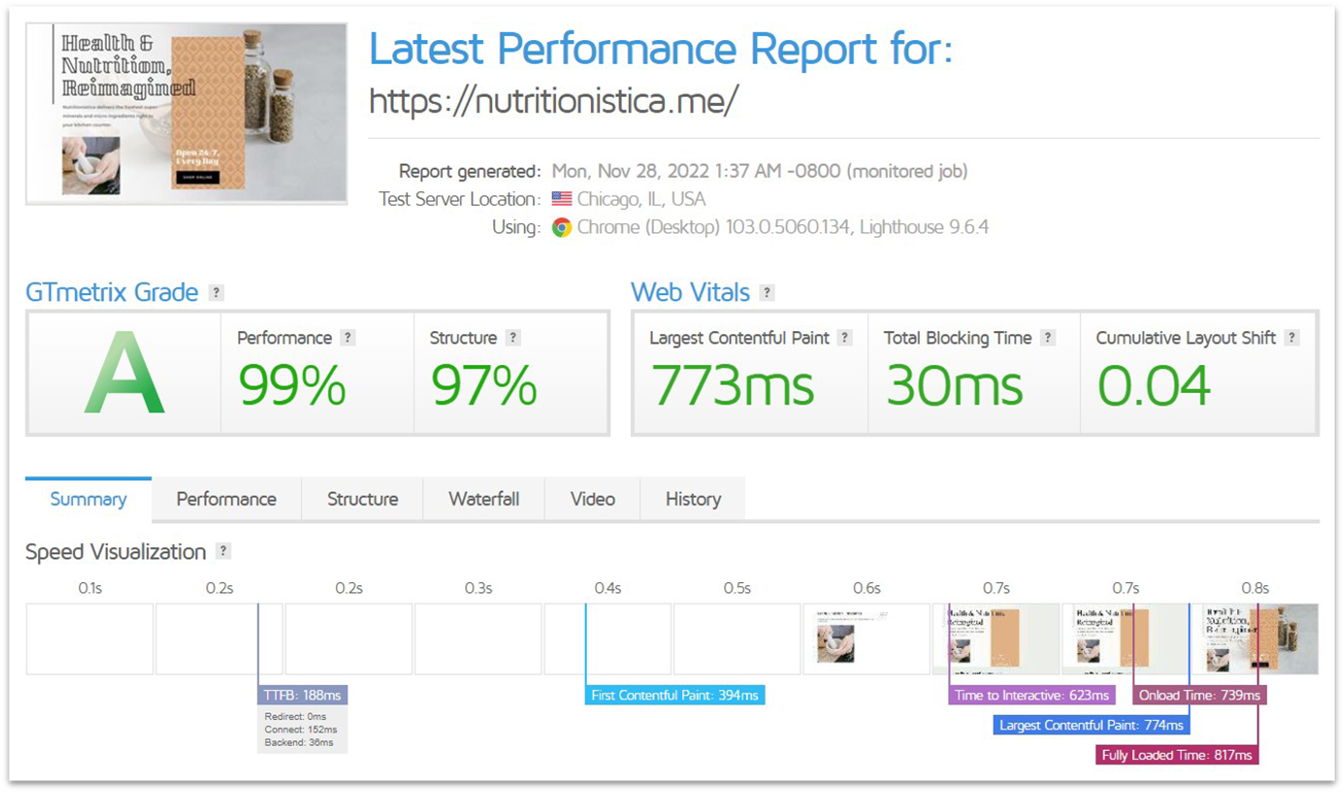
Our Hostinger-hosted website scored an A, with a 99% for performance and an impressive 0.19 second for Time to First Byte (TTFB). Fully Loaded Time was 0.82 seconds. This is Hostinger’s LiteSpeed servers and built-in WordPress optimizations. It’s also worth noting that Hostinger has recently upgraded to AMD EPYC-powered infrastructure, which offers improved speed, stability, and energy efficiency.
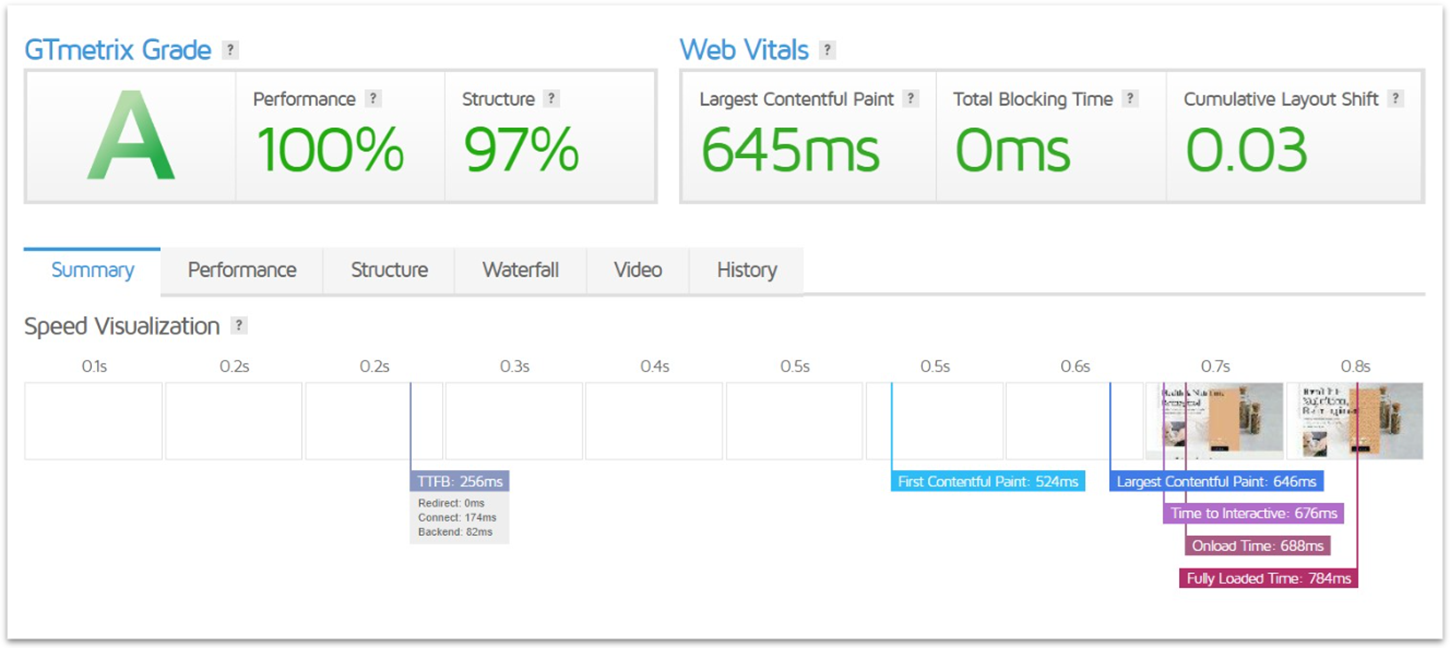
Now, when you look at the GTmetrix report for our IONOS-hosted website with its perfect 100% performance score, you might think that IONOS somehow got the better of Hostinger in this round. However, you’ll see that Time to First Byte is nearly one and a half times that of Hostinger’s at 0.26 seconds, with a fully loaded time of 0.78 seconds (you can head over to our IONOS review for more details).
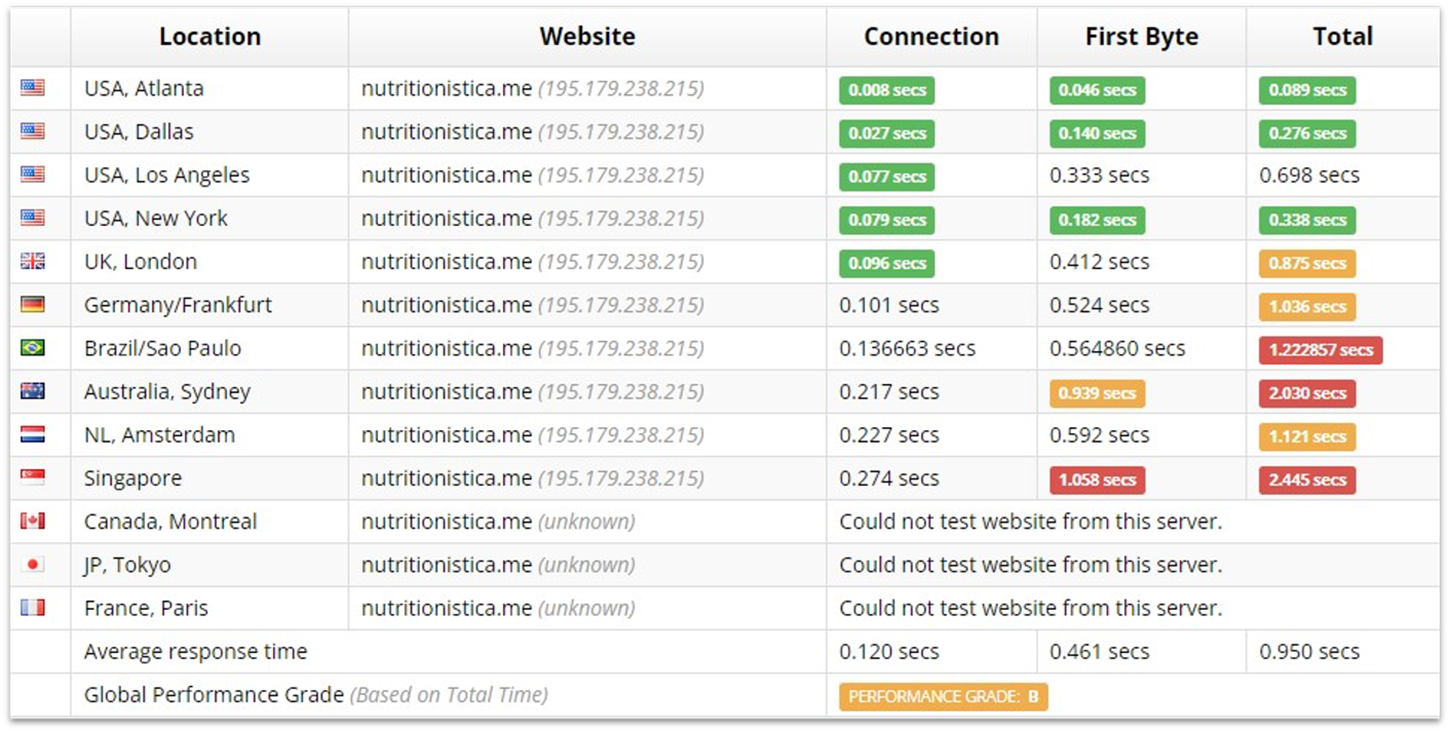
Next up, we compared each host on global loading speeds. A website will load faster for visitors near the data center location where your site is hosted. Hostinger and IONOS have data centers all over the globe. But Hostinger has a presence in South America and Asia, while IONOS is more EU-centric, which is evident in the test results. At least, it’s clear for Oceania and Asia test results, although IONOS did surprisingly well in Brazil.
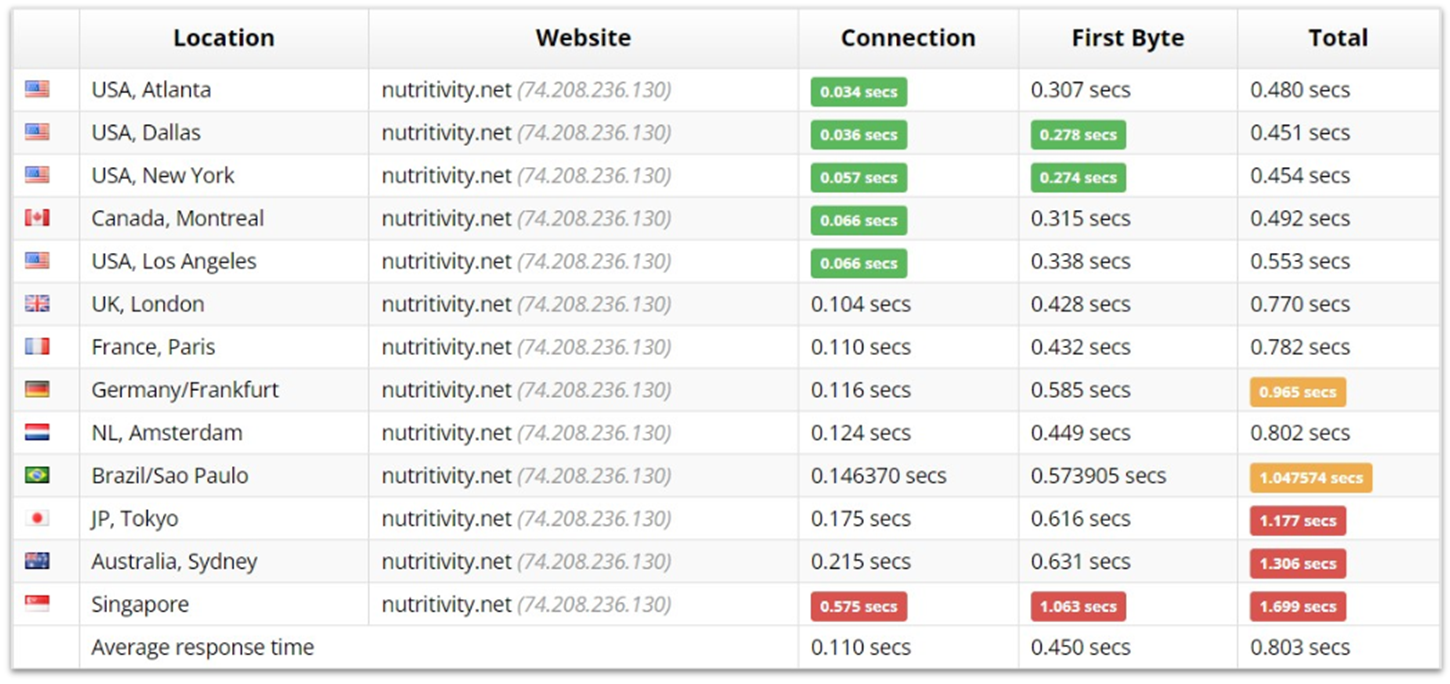
It doesn’t take your IONOS site any longer to fully load than a Hostinger-hosted site, true. But it takes IONOS’ servers twice as long to start sending data downstream to the user’s browser, which can severely impact your site’s performance. Hostinger should deliver better speed and performance in either case because it’s faster from the start. You can read the full performance report in our Hostinger review.
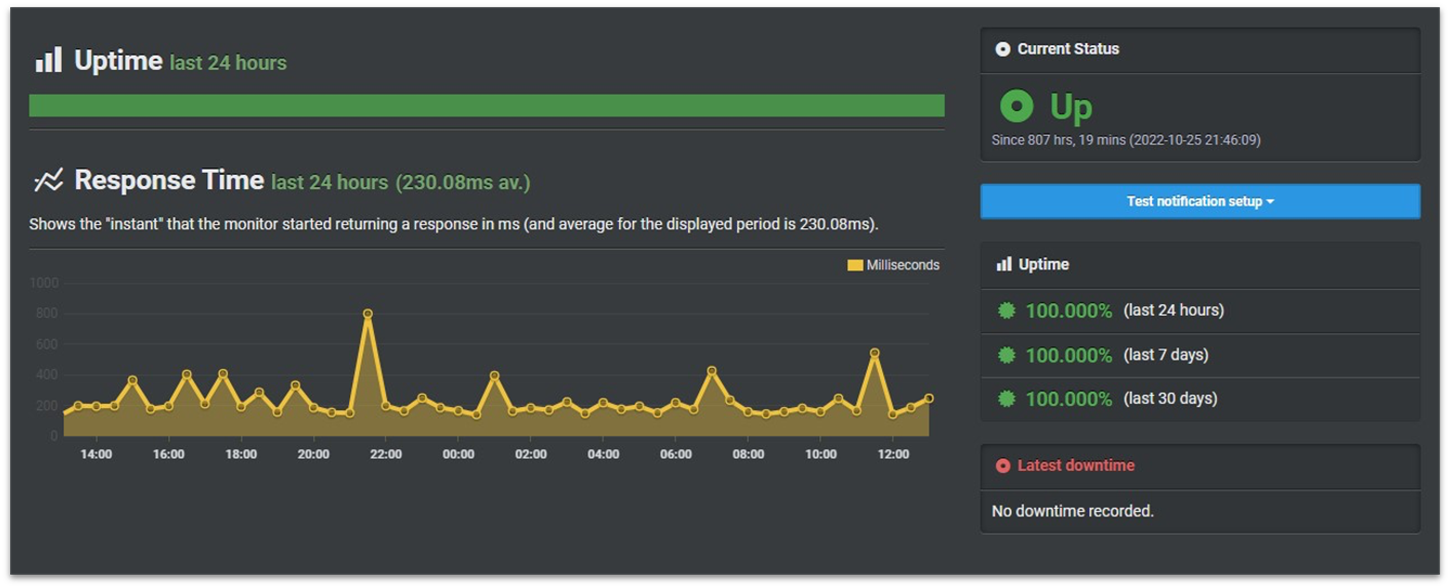
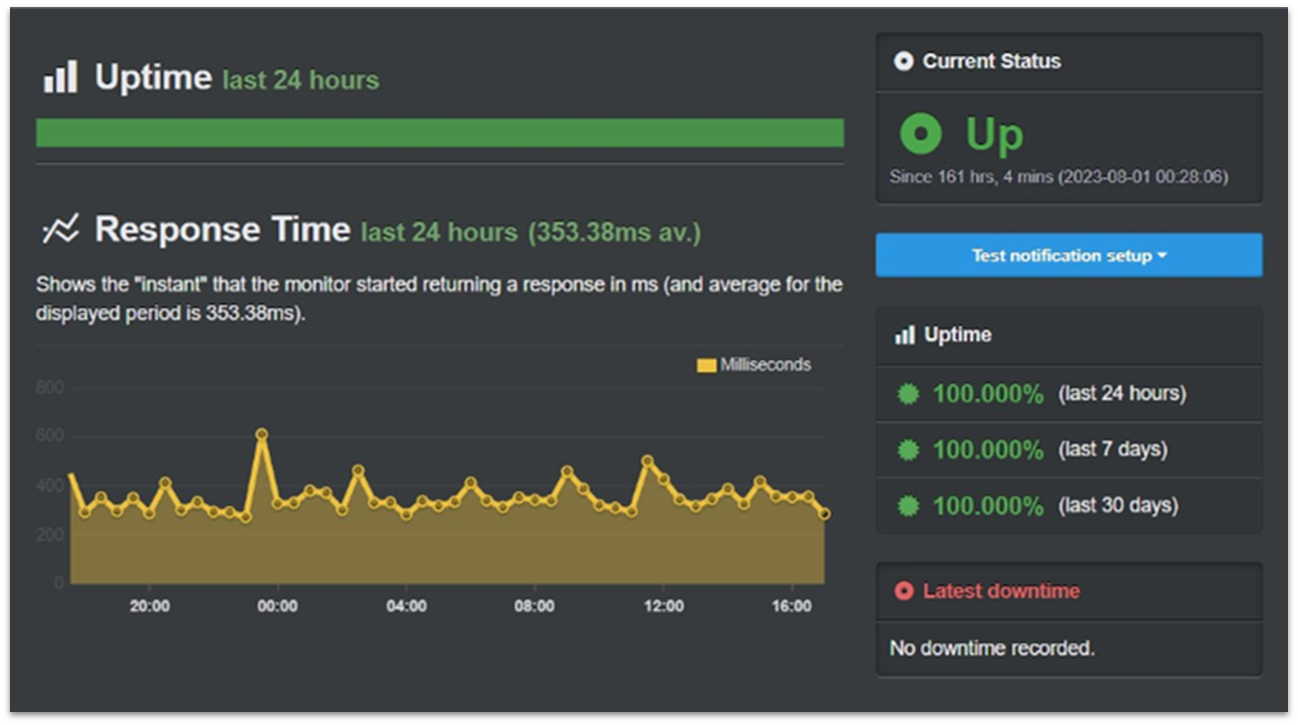
It doesn’t matter how speedily your website loads if your server is offline and can’t answer the user’s request. That’s why we check reliability using UptimeRobot. The reports for both hosts in this case were exactly the same: 100% uptime. That’s better than either host’s guarantee of 99.9%.
Both of these bargain hosts returned some excellent results in our testing, but we have to let Hostinger squeak by on its TTFB score and global performance. It doesn’t get much faster than that. And at half the time of IONOS, it deserves the credit.
Security
IONOS Is Safe, but Hostinger Is Safer
Security is all too often the one part where budget hosts cut corners, so I’m quite happy – if not a little surprised – that both IONOS and Hostinger offer stellar security features and protection directly from the start.
Starting with Hostinger, it offers malware scanning, custom DNS firewalls, a web application firewall (WAF), and a secure access manager. To detect potential threats, Hostinger employs a proactive machine-learning system that constantly searches for vulnerabilities or suspicious activity. And all of that on top of a zero-trust architecture means that your website will be secure from most threats.
IONOS also offers very robust security features, like DDoS protections, active malware scanning, and blockchain-based encryption and certificate management. It should be noted that if some malware does get past all of that, you would need an external service like SiteLock for malware removal.
Hostinger also includes free SSL, but only for your main domain on shared hosting. IONOS has a Wildcard SSL on all plans, which secures unlimited subdomains in addition to the main domain. Both hosts also offer daily backups and DDoS protection to keep your site up and running.
That said, Hostinger has an edge with optional dark web monitoring as a paid add-on, which IONOS doesn’t offer at all. This scans for leaked databases on the dark web and alerts you if it finds any of your account credentials or personal information, which is really handy given the constant increase in cybercrime.
Support
Hostinger Offers More Responsive, Higher-Quality Support
Both Hostinger and IONOS have multilingual 24/7 customer support. You can access Hostinger’s website in over 40 languages and support is offered in English, Arabic, Chinese, French, Indonesian, Lithuanian, Portuguese, Spanish, Thai, Ukrainian, and Vietnamese. IONOS, on the other hand, offers English, German, French, Italian, Spanish, and Romanian versions of its site and support languages.
IONOS also offers a “personal consultant.” to provide one-on-one, individualized support to all its customers. However, based on my experience, the customer support quality leaves much to be desired, and unfortunately, the live chat support option is often unavailable.
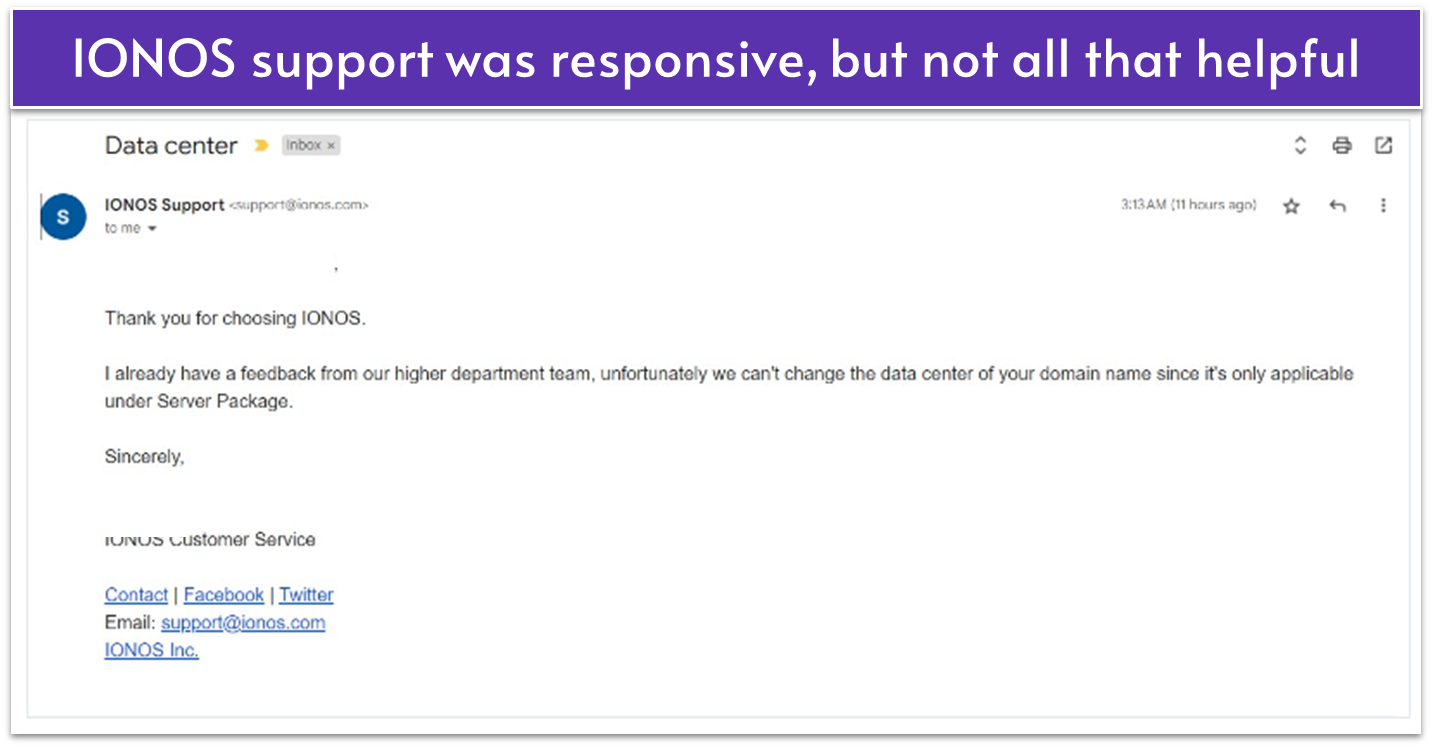
Unlike Hostinger, you’re able to get support via phone with IONOS – either by calling directly or requesting a callback. Unfortunately, the support team fell flat during our testing, lacking the technical knowledge to solve our reviewer’s issue. The agent did send a follow-up email after a phone call, but again, the answer was unsatisfactory.
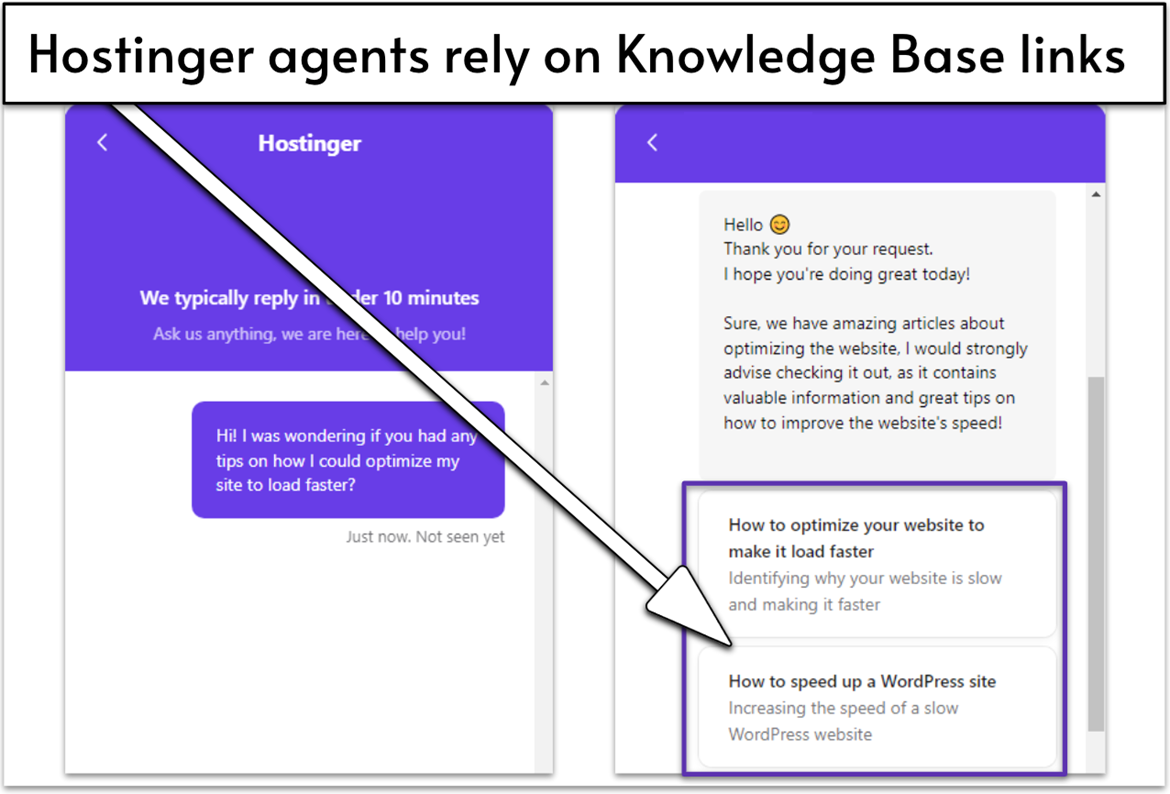
By contrast, Hostinger provides support via live chat, email, and an AI bot named Kodee.
To contact support through your hPanel account, you need to answer some questions about your issue. Your answers generate a list of knowledge base articles you have to go through first before you’re given the option to contact support. And in my experience, what that got me was more links to the knowledge center.
Receiving an answer from email support was almost as fast as live chat, but again support merely provided links. There were some extra above-and-beyond links thrown in, though, so that was an improvement.
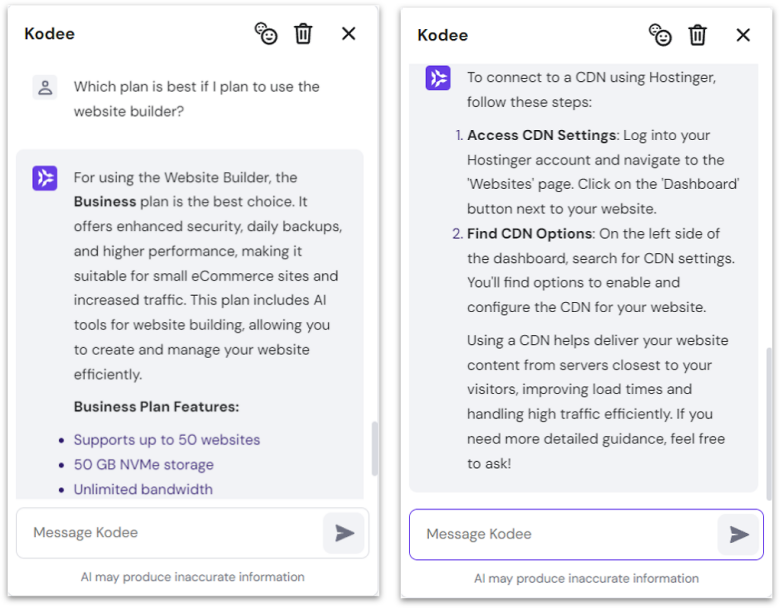
Hostinger also provides support through Kodee, its “AI sales expert” (Hostinger’s words, not mine). Kodee is available for both existing and prospective customers. When I tested it with questions about the website builder or how to connect a CDN, it gave me fairly generic – and somewhat nonetheless – answers.
If you’re more of a self-learner, both IONOS and Hostinger offer excellent knowledge bases, though Hostinger offers more material.
In the end, I’ll say this round goes to Hostinger. Both providers delivered fairly good customer support, but Hostinger’s team made more of an effort to provide solutions.
Hostinger Wins the Day
In all aspects, Hostinger wins, but especially for beginners and small-to- medium-size site owners. It offers better long-term pricing, faster initial load times, easier setup, and stronger built-in security. You also get free site migrations, making the switch low-risk and hassle-free. Even its somewhat mediocre support team manages to outperform IONOS’ team.
That doesn’t mean that IONOS isn’t a good host, however. It is, after all, our number two choice. It may not be able to topple Hostinger from its throne, but it has a lot to offer.
IONOS’ hosting options are flexible and feature an arsenal of advanced developer tools and versatile add-ons like PHP extended support and e-commerce plugins. It’s quite possible to scale your site without ever leaving IONOS. And while not as ideal as Hostinger for audiences in Asia and Oceania, IONOS fared well enough in the US and Europe, making it a strong contender for region-specific hosting needs.